Water Pooling Around the Indoor AC Unit? Clogged Condensate Line
Quick Answer: Water pooling around an indoor AC unit almost always points to a clogged condensate drain line or a full drain pan. As your system cools the air, it also pulls moisture out of it, and that water is supposed to drip into a pan and flow out through a small drain line. When dust, dirt, or algae block that line, the water backs up and spills over instead. Many systems also have a float switch that senses the rising water and shuts the whole unit down before it overflows further, which is why a puddle is sometimes followed by the AC refusing to run at all. A clear line can often be cleared with a wet/dry vacuum and a flush, but recurring puddles, rust in the pan, or a musty smell mean it's time to bring in a technician.
You walk past the utility closet on a sticky August afternoon and stop. There's a puddle spreading across the floor at the base of the air handler, and the carpet nearby already feels damp underfoot. The system is still running, so nothing seems wrong at first glance — until you notice the water keeps coming back no matter how many towels you throw down.
That puddle isn't random. In most cases, it means the condensate drain line inside your AC has clogged, and the water your unit is supposed to carry safely outside is backing up into the house instead. Knowing why that happens, what you can check yourself, and when the problem needs a technician's tools can save you from a much bigger repair later.
What's Actually Happening Inside Your AC
Every central air conditioner pulls humidity out of the air as a side effect of cooling. Warm, moisture-heavy indoor air passes over the cold evaporator coil. Because that coil sits below the air's dew point, moisture condenses into water on its surface — the same way a cold glass sweats on a humid day.
The drain pan collects it first. Those droplets run off the coil and settle into a shallow condensate drain pan mounted directly underneath it.
From there, gravity takes over.
The drain line carries the water away through a length of PVC pipe that routes it out of the house or into a floor drain. When everything's working, you never see this water at all. It just disappears outside, often dripping quietly near the outdoor condenser.
Most residential systems also build in a backup.
A secondary drain pan and line typically terminate above a window or exterior door, somewhere you'd actually notice a drip. That second system exists purely to catch overflow if the primary line fails — which says something about how often this particular failure shows up in the field.
Why the Line Clogs, Especially in a Baltimore Summer
A condensate line is a narrow pipe that stays wet almost continuously whenever the AC runs. Moisture, warmth, and a dark interior make for exactly the conditions where buildup takes hold. It rarely happens all at once. It's a slow accumulation that eventually tips over into a visible problem.
Dust And Dirt Settle Out Of The Airflow
Even with a filter in place, fine particles slip past and collect inside the pan and line over time, gradually narrowing the passage.
Algae And Mold Find Ideal Conditions
The inside of a drain line is dark, damp, and rarely disturbed — a natural spot for algae and mold to take hold. Once a colony establishes itself, it can form a slimy layer that traps more debris and chokes off the flow further.
Baltimore County summers don't help. Long, humid stretches push cooling systems to run for hours on end just to keep up, which means more total condensate moving through the line and more chances for buildup to form. Homes with older ductwork, attic-mounted air handlers, or a unit tucked into a tight closet tend to see this more often, mostly because those lines run longer and get checked less.
Aging equipment adds another layer. In older systems, a metal drain pan can start to rust, and that rust can flake into the line and combine with existing buildup to speed a clog along.
Signs You're Dealing With a Clogged Line, Not Something Worse
Not every AC problem that shows up as water is a drain line issue. But a handful of signs point strongly in that direction.
Standing Water In The Drain Pan Or Around The Unit
Standing water in or around the drain pan indicates the condensate line is draining too slowly or has stopped moving water completely.
Rust Developing On The Pan
Water left sitting in the drain pan accelerates corrosion, and developing rust often indicates moisture problems have persisted beyond a single afternoon.
A Musty Smell Near The Vents Or The Indoor Unit
Standing water combined with dust creates conditions for mold, while a persistent damp odor often provides an early warning before visible water appears.
The Condensate Safety Switch
Many air handlers have a condensate safety switch, usually a float switch, designed to shut down the system when water rises.
The System Shuts Off On Its Own
If your AC repeatedly shuts down after short run times with nearby water, the safety switch may be preventing serious water damage.
Performance Starts Dropping
A backed-up condensate line may not immediately shut down your AC, but restricted drainage can quietly reduce performance while hidden water accumulates.
DIY Checks You Can Safely Try First
Catch the clog early and there's a decent chance you can clear it yourself before it turns into a bigger issue. One ground rule first: this involves water near electrical components, so cut power to the system before you touch anything.
Turn Off The System At The Thermostat And The Breaker
Turn off the system at both the thermostat and breaker to protect yourself and equipment while working near wiring or drainage components.
Locate The Drain Line
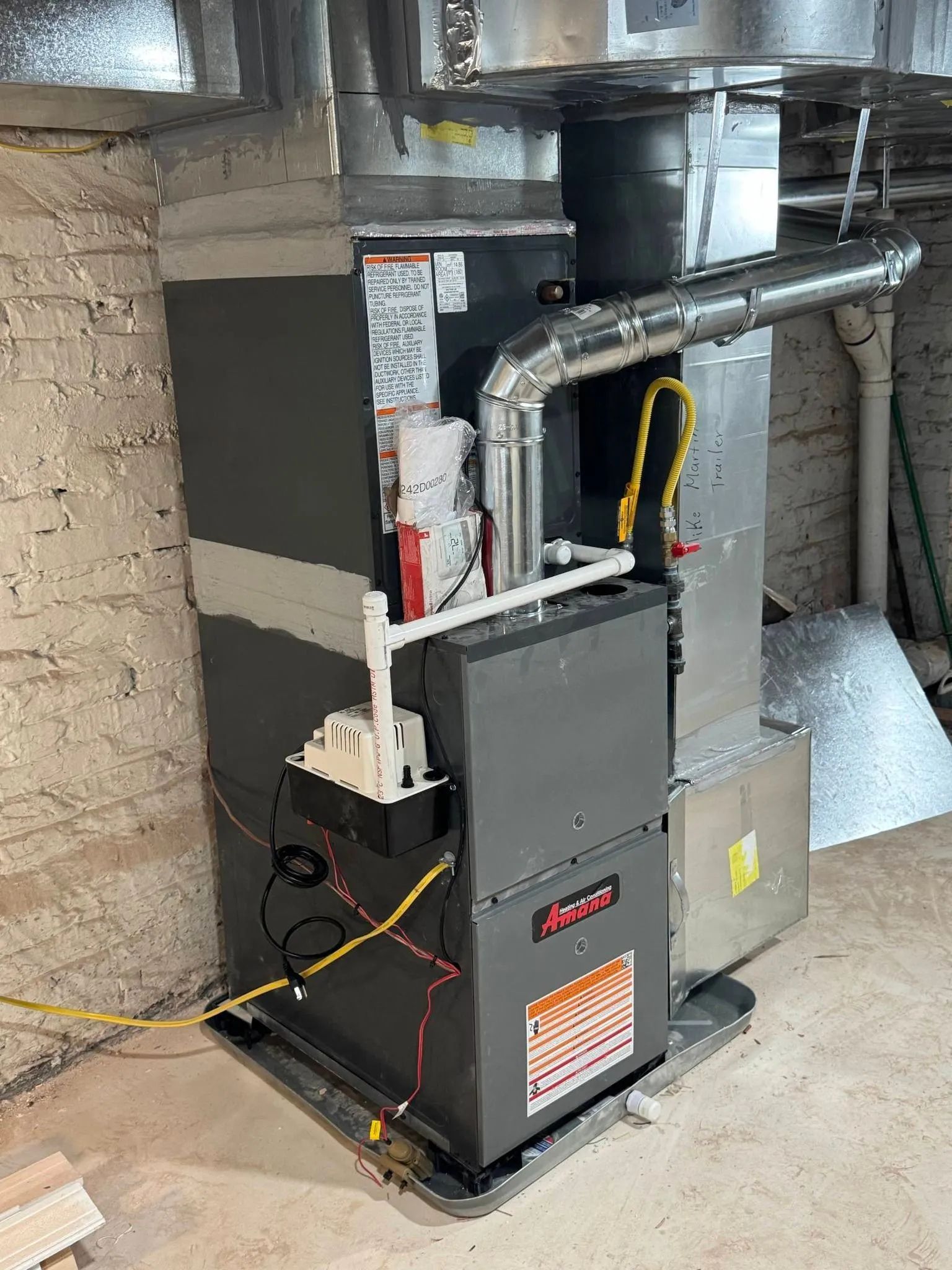
The drain line typically runs from the indoor air handler or furnace coil toward a nearby drain, floor sink, or condensate pump.
Look For A T-Shaped Cleanout Fitting Or Cap
Look for a removable T-shaped cleanout cap near the unit, then inspect inside for standing water, debris, or visible blockages.
Clear What You Can Reach
Use a wet/dry shop vacuum over the line's accessible end to pull out clogs. Avoid rigid tools that could damage PVC.
Flush The Line
Pour diluted vinegar into the cleanout, let it sit about thirty minutes, then slowly flush with water to loosen algae and buildup.
Check And Clean The Drain Pan
Remove standing water and debris from the drain pan, then check that water flows freely before turning the system back on.
TIP: Mark your calendar to flush the condensate line every few months during cooling season, especially if your system runs long hours through a humid Maryland summer. A few minutes of prevention beats mopping up a puddle later.
Turn the system back on and watch the pan for a cycle or two. Water flowing freely and no puddle returning means you likely solved it. If it comes right back, or you couldn't locate or reach the clog at all, that's your cue to stop the DIY approach and call in a technician.
TIP: Place a working carbon monoxide detector on every level of your home and within earshot of sleeping areas. Replace the batteries twice a year when you change your clocks, and test the unit monthly.
When to Stop and Call a Professional
Some situations call for a trained eye and the right tools, not another round of vinegar and a shop vac.
The Clog Keeps Coming Back
Recurring puddles after clearing the line usually indicate a deeper issue, such as improper pipe pitch, a failing condensate pump, or a blockage farther along that a household vacuum cannot reach or remove.
There's Already Visible Water Damage
Warped flooring, stained ceiling tiles, or rust spreading across the drain pan suggests the problem has lasted beyond one clog. A technician should inspect whether surrounding components or building materials were affected.
You Can Smell Mold, Not Just Dampness
A musty odor that remains after cleaning accessible system areas may indicate mold growth somewhere beyond your reach. Professional inspection can help determine whether hidden moisture or contamination needs specialized treatment.
The Clog Is Out Of Reach
Drain lines running through walls, attics, or cramped mechanical closets can be difficult to access safely. Specialized equipment may be necessary to clear deeper blockages without damaging the pipe or surrounding components.
The System Won't Stay On
If the float switch keeps tripping after you've cleared the accessible blockage, the problem may lie farther down the line, with improper pan drainage, or with the float switch itself.
A technician can also check parts of the system a homeowner typically can't inspect directly — the evaporator coil, the pitch and slope of the drain line, and whether a condensate pump is actually working in units where gravity alone can't move water to a drain.
WARNING: Never bypass or disable a condensate safety switch to keep the system running. That switch exists specifically to stop water from reaching your ceilings, walls, or floors, and forcing the AC to run with it disabled risks real structural and mold damage that costs far more to fix than the original clog.
Preventing the Next Puddle
A few habits go a long way toward keeping the drain line clear through a full Maryland cooling season.
Change The Air Filter On Schedule
A clean filter helps prevent dust and debris from reaching the evaporator coil, reducing buildup in the drain pan and line. Most residential filters need replacement about every three months, though some homes require more frequent changes.
Flush The Line Periodically, Not Just When There's A Problem
Proactively flushing the drain line several times during cooling season helps prevent algae and sediment from accumulating enough to create a complete blockage, keeping condensate moving properly and reducing the chance of unexpected drainage problems.
Keep The Space Around The Indoor Unit Clean
Keeping the area surrounding your indoor unit clean can reduce how much dust gets pulled into the system. Less nearby debris means less material circulating through the equipment and potentially contributing to buildup in components and drainage areas.
Schedule A Seasonal Tune-Up
A professional tune-up typically includes clearing the drain line, inspecting the drain pan, and checking moisture management. Regular service can identify developing problems early, helping prevent minor drainage issues from becoming major problems during periods of heavy system use.
Keep Indoor Humidity In A Healthy Range
The U.S. Environmental Protection Agency recommends keeping indoor humidity below 60 percent, ideally between 30 and 50 percent. Maintaining these levels helps limit mold growth while keeping drip pans clean and drain lines unobstructed.
Older rowhomes, and homes converted from oil heat to gas or where central air got added well after the house was built, sometimes have condensate lines routed in less-than-ideal ways — tighter bends, longer runs than a fresh install would use. If your line clogs again and again no matter how well you keep up with the filter, it's worth having a technician look at whether the line itself needs to be rerouted rather than just cleared one more time.
Frequently Asked Questions
Is water pooling around my AC unit dangerous?
It can cause real problems if ignored. Standing water promotes mold growth, can damage flooring and drywall, and may cause electrical issues nearby. Rarely an emergency right away, but don't leave it.
Why does my AC shut off completely instead of just leaking?
Many systems include a condensate safety switch, often a float switch in the drain pan, shutting the unit down once water rises too high. A system cutting off is usually protecting your house.
Can I use bleach to clear a clogged AC drain line?
Diluted vinegar is gentler for regular maintenance and less likely to damage seals than straight bleach. For a heavily clogged line, ask a technician about a cleaner made for condensate lines.
How often should a condensate line be flushed?
Checking and flushing the line every few months during cooling season is a reasonable baseline for most homes. Systems running long hours through summer, or that clogged before, need more attention.
Does a clogged drain line mean my AC is broken?
Not usually. The compressor, coils, and refrigerant system are typically fine. The clog is a maintenance issue on the moisture removal side, though ignoring it can affect performance and cause damage.
Why is my drain pan rusting?
Rust develops when water sits in a metal pan longer than it should, pointing to a drainage problem rather than a pan defect. Once rust starts, it can flake off and clog the line.
A Small Puddle With a Clear Message
That water on the floor isn't just an inconvenience to mop up before it stains the carpet. It's the system telling you where attention is needed, long before a bigger repair lands on a service invoice. Most causes trace back to something as simple as trapped dust or a slow buildup of algae, both preventable with a little regular upkeep. Treating that puddle as information, rather than a nuisance, keeps a minor clog from turning into a larger problem later on.
Alpha Heating & AC
has spent 70
years working on homes and businesses throughout Perry Hall, MD, and understands how a small drainage issue can turn into a bigger headache during a long cooling season. That kind of experience shows in how a clogged line gets diagnosed, cleared, and kept from returning, rather than just patched for the moment. A little attention to the moisture side of a cooling system pays off through every humid summer that follows.